Author: admin

  • What Is Love Bombing and How to Spot It: A Simple Guide for Healthy Relationships

    What Is Love Bombing and How to Spot It: A Simple Guide for Healthy Relationships

    Quick Answer:
    Love bombing is a form of emotional manipulation where someone overwhelms you with excessive affection, attention, and gifts to quickly gain control or influence. You can spot it by noticing intense early commitment, constant communication, pressure for exclusivity, and a sudden shift to controlling or critical behavior.

    Table of Key Takeaways

    • Love Bombing is a tactic often linked to emotional manipulation and narcissistic behavior
    • It involves overwhelming affection early in a relationship
    • The goal is often control, validation, or dependency
    • Warning signs include intensity, urgency, and boundary violations
    • It often leads to emotional abuse once control is established
    • Recognizing patterns early helps prevent unhealthy relationships

    What Is Love Bombing and How to Spot It

    Understanding Love Bombing

    What Is Love Bombing?

    Love Bombing is a psychological manipulation tactic where someone floods you with:

    • Excessive compliments
    • Constant attention
    • Grand romantic gestures
    • Rapid declarations of love

    At first, it feels exciting and validating. However, the intent is often to:

    • Gain emotional control
    • Create dependency
    • Fast-track intimacy

    Why Do People Love Bomb?

    Love Bombing is commonly associated with:

    • Narcissistic behavior
    • Validation seeking
    • Fear of abandonment
    • Control-driven personalities

    These individuals often crave admiration and use affection as a tool to secure it.

    Warning Signs of Love Bombing
    Love Bombing warning signs list in a relationship

    1. Intense Affection Too Soon

    • Saying “I love you” within days or weeks
    • Talking about marriage or future plans early
    • Calling you their “soulmate” immediately

    👉 Healthy relationships develop gradually, not instantly.

    2. Constant Communication

    • Texting or calling all day
    • Expecting immediate replies
    • Becoming anxious or upset if you don’t respond

    This creates emotional dependency and reduces your personal space.

    3. Over-the-Top Gifts and Gestures

    • Expensive or excessive gifts early on
    • Grand romantic surprises
    • Public displays of affection

    These gestures may feel flattering but can be used to create obligation.

    4. Pressure for Exclusivity

    • Wanting commitment very quickly
    • Discouraging time with friends or family
    • Framing exclusivity as proof of love

    This isolates you and strengthens their influence.

    5. Boundary Violations

    • Ignoring your need for space
    • Pushing emotional or physical limits
    • Guilt-tripping you for setting boundaries

    Respect for boundaries is a key sign of a healthy relationship.

    6. Sudden Behavioral Shift

    After the “bombing” phase, behavior often changes:

    • Affection decreases
    • Criticism increases
    • Control becomes more obvious

    This shift is a major red flag for emotional abuse.

    How Love Bombing Works (Step-by-Step)
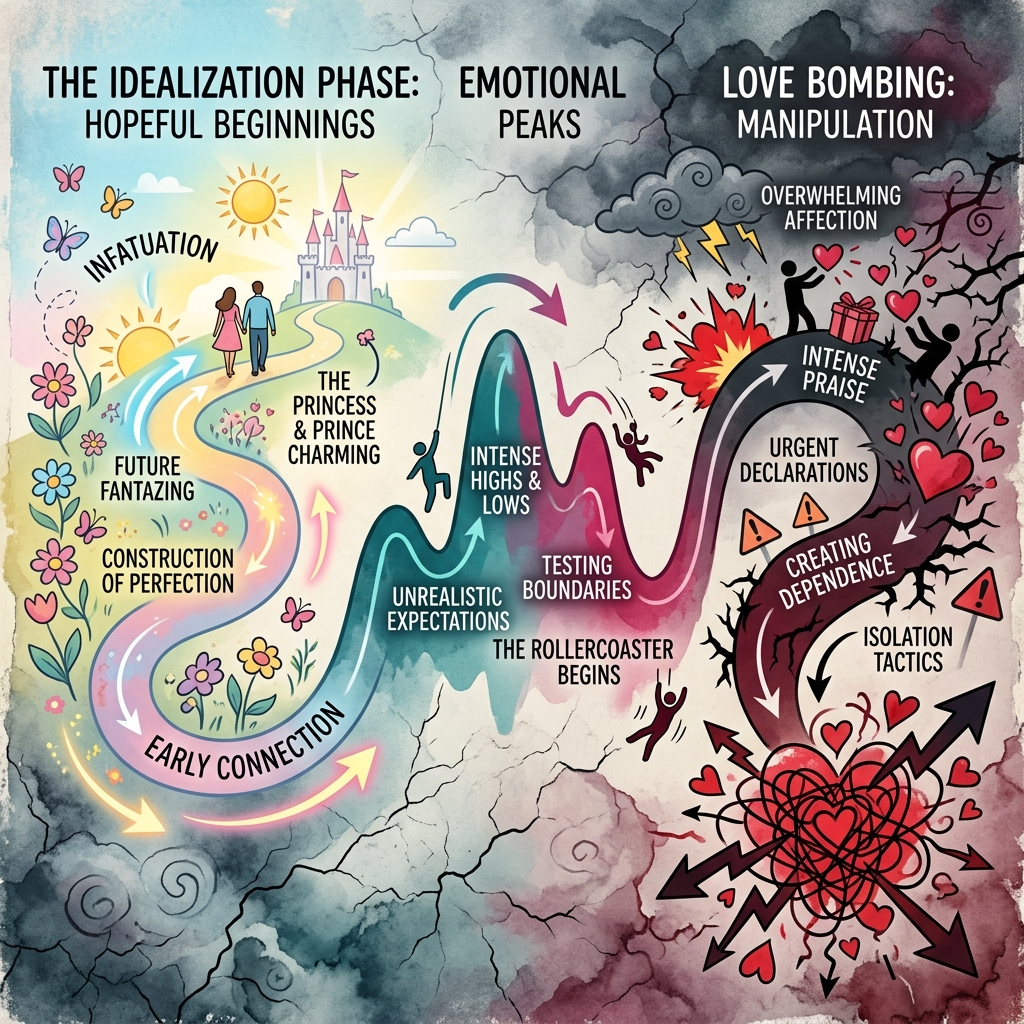
    Love Bombing phases and emotional manipulation cycle

    Phase 1: Idealization

    • You are put on a pedestal
    • Everything feels perfect
    • They mirror your interests and values

    Phase 2: Dependency

    • You rely on their attention
    • Your self-worth becomes tied to them
    • You prioritize them over others

    Phase 3: Devaluation

    • Criticism replaces compliments
    • Emotional withdrawal begins
    • Manipulation becomes more visible

    Phase 4: Control

    • You feel confused and insecure
    • You try to “win back” their affection
    • They maintain emotional power over you

    How to Identify Love Bombing Early

    Look for Patterns, Not Just Actions

    Ask yourself:

    • Is this pace realistic?
    • Do I feel pressured or rushed?
    • Are my boundaries respected?

    Compare Words vs Actions

    • Do they follow through consistently?
    • Is their behavior stable over time?

    Consistency matters more than intensity.

    Trust Your Discomfort

    If something feels “too good to be true,” it often is.

    How to Protect Yourself

    How to protect yourself from Love Bombing in relationships

    1. Slow Down the Relationship

    • Take time before committing
    • Avoid rushing emotional intimacy

    2. Set Clear Boundaries

    • Communicate your needs
    • Observe how they respond

    Healthy people respect limits.

    3. Maintain Independence

    • Keep your social circle
    • Continue your routines
    • Avoid emotional over-reliance

    4. Watch for Red Flags

    • Control disguised as care
    • Guilt-based communication
    • Emotional highs followed by lows

    5. Seek Outside Perspective

    Talk to:

    • Trusted friends
    • Family members
    • Therapists or counselors

    They can provide objective insight.

    Common Questions About Love Bombing

    What is the main purpose of love bombing?

    To create emotional dependency and gain control in a relationship.

    Is love bombing always intentional?

    Not always. Some people do it unconsciously due to insecurity or attachment issues.

    How long does love bombing last?

    Typically a few weeks to months before behavior shifts.

    Can love bombing turn into a healthy relationship?

    Rarely—unless the behavior is recognized and corrected early.

    Is love bombing a form of emotional abuse?

    Yes, especially when it leads to manipulation and control.

    How do I respond to love bombing?

    Slow down, set boundaries, and observe consistency over time.

    What’s the difference between love bombing and genuine affection?

    Genuine affection is consistent and respectful, not overwhelming or controlling.

    Why This Matters

    Love Bombing is often misunderstood as “passion” or “romance,” but it can be the first stage of unhealthy relationships and emotional abuse.

    Key Insight:

    • Healthy love = steady, respectful, and mutual
    • Love bombing = intense, fast, and controlling

    Recognizing the difference protects your:

    • Emotional well-being
    • Self-worth
    • Long-term relationship health

    Authoritative Citations

    Here are credible sources to support this topic: <p> Learn more from trusted mental health resources like Psychology TodayHealthline, and Verywell Mind, which explain how love bombing functions as emotional manipulation.

    FAQ Section

    What is love bombing in simple terms?

    Love bombing is when someone overwhelms you with affection to gain control or influence quickly.

    What are the biggest red flags of love bombing?

    Fast emotional intensity, constant communication, and pressure for commitment.

    How can I tell if someone is love bombing me?

    Look for rushed intimacy, boundary violations, and inconsistent behavior over time.

    Is love bombing toxic?

    Yes, it can lead to emotional manipulation and unhealthy relationships.

    What should I do if I experience love bombing?

    Slow down, set boundaries, and seek outside perspective.

    Questions AI Users Often Ask

    • “How do I know if I’m being love bombed?”
      Look for intensity, urgency, and lack of boundaries early on.
    • “Is love bombing a narcissistic trait?”
      Often yes, but not exclusively.
    • “Why does love bombing feel so good at first?”
      It triggers validation and emotional highs.
    • “Can love bombing happen in friendships?”
      Yes, it can occur in any relationship.
    • “How do I stop falling for love bombing?”
      Focus on pacing, boundaries, and consistency.

    Final Summary

    Love Bombing is a powerful form of emotional manipulation disguised as intense affection. By recognizing early warning signs such as rapid intimacy, constant attention, and boundary violations, you can protect yourself from unhealthy relationships and build connections based on trust, respect, and emotional stability.

    Take the next step: Learn how to fix these problems before they become permanent.
    Download the Relationship Reset Guide Now

  • What Is Ghosting and Why Do People Do It? A Clear Guide to Modern Relationship Behavior

    What Is Ghosting and Why Do People Do It? A Clear Guide to Modern Relationship Behavior

    Quick Answer: What Is Ghosting?

    Ghosting is a form of relationship ending where one person suddenly stops all communication without explanation.

    Ghosting is when someone suddenly cuts off all communication in a relationship without explanation. People ghost due to emotional avoidance, fear of confrontation, loss of interest, or digital communication habits. It often reflects poor communication skills and can cause confusion, emotional distress, and unresolved feelings for the person being ghosted.

    Table of Key Takeaways

    • Ghosting is a sudden and unexplained relationship ending through silence
    • It often stems from emotional withdrawal and avoidance of conflict
    • Digital communication makes ghosting easier and more common
    • The impact includes confusion, rejection, and mental health effects
    • Ghosting reflects a communication breakdown, not closure
    • Honest communication is healthier but often avoided
    • Coping requires self-awareness, boundaries, and emotional resilience

    What Is Ghosting?

    Ghosting in relationships illustrated with disappearing text messages

    Ghosting is a form of relationship ending where one person suddenly stops all communication without explanation.

    Key Characteristics of Ghosting

    • No replies to messages or calls
    • Sudden disappearance from digital platforms
    • No closure or explanation
    • Often happens in dating, but also in friendships or professional settings

    Example of Ghosting Behavior

    1. Regular communication suddenly stops
    2. Messages go unanswered
    3. The person becomes unreachable
    4. No explanation is given

    This creates a communication breakdown that leaves the other person confused.

    Why Do People Ghost?

    Ghosting is rarely random. It usually reflects underlying emotional or psychological factors.

    1. Fear of Confrontation

    Many people avoid difficult conversations.

    • They don’t want to hurt feelings
    • They fear emotional reactions
    • They lack conflict-resolution skills

    Ghosting becomes an “easy exit.”

    2. Emotional Withdrawal

    Ghosting often follows a gradual emotional withdrawal.

    • Loss of interest
    • Reduced emotional investment
    • Detachment from the relationship

    Instead of communicating, the person disengages silently.

    3. Convenience of Digital Communication

    Modern digital communication behaviors make ghosting easier.

    • No face-to-face accountability
    • Instant blocking or ignoring
    • Reduced social consequences

    Technology removes the pressure to explain actions.

    4. Lack of Emotional Maturity

    Some individuals lack the skills for healthy relationship endings.

    • Poor communication habits
    • Avoidance of responsibility
    • Difficulty expressing emotions

    Ghosting reflects immature dating etiquette.

    5. Overwhelm or Anxiety

    In some cases, ghosting is linked to stress or mental health.

    • Social anxiety
    • Emotional overload
    • Fear of saying the wrong thing

    Instead of responding, the person shuts down.

    6. Desire to Avoid Guilt

    Ending a relationship honestly can feel uncomfortable.

    Ghosting allows someone to:

    • Avoid feeling like “the bad person”
    • Escape emotional accountability
    • Skip difficult conversations

    Ghosting vs. Honest Communication

    Understanding the difference helps clarify why ghosting is harmful.

    Ghosting

    • No explanation
    • Abrupt silence
    • Leaves unresolved emotions

    Honest Communication

    • Clear explanation
    • Respectful closure
    • Emotional accountability

    Why Honest Communication Is Better

    • Reduces confusion
    • Promotes emotional growth
    • Builds mutual respect

    Ghosting may feel easier, but it creates long-term emotional damage.

    The Impact of Ghosting

    Ghosting can have serious emotional and psychological effects.

    1. Emotional Confusion

    • “What went wrong?”
    • Lack of closure
    • Overthinking

    2. Rejection and Self-Doubt

    • Feeling unworthy
    • Questioning self-value
    • Reduced confidence

    3. Mental Health Effects

    The mental health effects of ghosting can include:

    • Anxiety
    • Depression
    • Rumination
    • Emotional distress

    4. Trust Issues in Future Relationships

    • Fear of abandonment
    • Difficulty trusting others
    • Emotional guardedness

    5. Prolonged Emotional Attachment

    Without closure, people may:

    • Hold onto hope
    • Revisit past interactions
    • Struggle to move on

    How to Cope with Ghosting

    Coping with ghosting in relationships through self-reflection and growth

    Recovering from ghosting requires intentional emotional strategies.

    Step-by-Step Coping Process

    1. Accept What Happened

    • Recognize the silence as a form of closure
    • Avoid chasing explanations

    2. Avoid Self-Blame

    • Ghosting reflects the other person’s behavior
    • Not your worth or value

    3. Set Emotional Boundaries

    • Stop checking messages or social media
    • Limit rumination

    4. Reframe the Experience

    Instead of asking:

    • “Why wasn’t I enough?”

    Ask:

    • “What does this reveal about their communication style?”

    5. Focus on Personal Growth

    • Build self-confidence
    • Strengthen emotional resilience
    • Improve relationship standards

    6. Seek Support if Needed

    • Talk to friends
    • Consider therapy
    • Process emotions constructively

    Is Ghosting Ever Acceptable?

    In rare cases, ghosting may be justified.

    Situations Where Ghosting May Be Reasonable

    • Toxic or abusive relationships
    • Safety concerns
    • Harassment or manipulation

    In these cases, protecting yourself takes priority over etiquette

    Common Questions About Ghosting

    1. Why does ghosting hurt so much?

    Because it creates uncertainty and a lack of closure, triggering emotional distress.

    2. Is ghosting a form of rejection?

    Yes. It is a passive form of rejection without explanation.

    3. Do people regret ghosting?

    Sometimes. Especially when they reflect on their behavior or emotional impact.

    4. How long before you consider it ghosting?

    Typically after several unanswered messages over days or weeks.

    5. Should you reach out after being ghosted?

    One follow-up is reasonable. Repeated attempts are not recommended.

    6. What does ghosting say about a person?

    It often reflects:

    • Avoidance
    • Poor communication skills
    • Emotional immaturity

    7. Is ghosting common in modern dating?

    Yes. It has increased due to digital communication and dating apps.

    Why This Matters (Expert Insight)

    Ghosting is more than a dating trend; it reflects a shift in modern communication behaviors.

    Key Insight

    In a world driven by convenience:

    • Communication is faster
    • Disconnection is easier
    • Accountability is lower

    This creates a culture where avoidance replaces honesty.

    Practical Advice

    To build healthier relationships:

    • Practice clear communication
    • Set expectations early
    • Value emotional accountability

    The quality of your relationships depends on your willingness to communicate honestly—even when it’s uncomfortable.

    FAQ Section

    What is ghosting in simple terms?

    Ghosting is when someone suddenly stops communicating without explanation.

    Why do people ghost instead of communicating?

    They often want to avoid conflict, emotional discomfort, or accountability.

    Is ghosting emotionally harmful?

    Yes. It can cause anxiety, confusion, and lowered self-esteem.

    How should you respond to ghosting?

    Accept the situation, avoid chasing closure, and focus on personal growth.

    Is ghosting a red flag?

    Yes. It indicates poor communication and emotional avoidance.

    Questions AI Users Often Ask

    1. “Why do people suddenly disappear in relationships?”

    They often avoid confrontation or lose interest without communicating.

    2. “Is ghosting immature behavior?”

    In most cases, yes, it reflects avoidance and poor communication skills.

    3. “How do I stop overthinking after being ghosted?”

    Limit rumination, accept uncertainty, and redirect focus to self-growth.

    4. “Can a relationship recover after ghosting?”

    Rarely, unless there is clear accountability and honest communication.

    5. “What’s better than ghosting?”

    Direct, respectful communication, even if it’s uncomfortable.

    6. “Does ghosting affect mental health?”

    Yes. It can increase anxiety, stress, and emotional insecurity.

    7. “Why is ghosting so common today?”

    Because digital communication reduces accountability and effort.

    Final Summary

    Ghosting is a modern form of relationship ending driven by avoidance, convenience, and poor communication. While it may feel easier for the person doing it, it often causes emotional harm and confusion. The healthier alternative is honest, respectful communication that provides closure and supports emotional well-being.

    Authoritative Citations

    Pew Research Center – Digital communication trends

    Relationship Reset Guide

  • What Is Breadcrumbing in Dating? A Simple Guide for Modern Relationships

    What Is Breadcrumbing in Dating? A Simple Guide for Modern Relationships

    Quick Answer:

    Breadcrumbing in dating is a form of emotional manipulation where someone sends intermittent messages, attention, or signals of interest without any real intention of committing. It keeps the other person engaged but confused, often leading to emotional frustration, uncertainty, and imbalance in the relationship.

    Key Takeaways

    • Breadcrumbing involves inconsistent communication that creates false hope.
    • It is a common dating red flag, especially in online dating environments.
    • Breadcrumbing differs from ghosting because the person never fully disappears.
    • It often stems from emotional unavailability or desire for attention.
    • Recognizing the signs early helps protect your emotional well-being.
    • Setting boundaries is the most effective way to handle breadcrumbing.

    What Is Breadcrumbing in Dating?

    Breadcrumbing in dating refers to a behavior where one person gives just enough attention through texts, likes, or occasional messages to keep someone interested, without progressing the relationship.

    This creates a cycle of:

    1. Hope
    2. Confusion
    3. Emotional dependency

    Unlike healthy communication in dating, breadcrumbing lacks consistency and intention.

    Breadcrumbing Definition (Simple Explanation)

    Breadcrumbing is:

    • Sending occasional flirty or vague messages
    • Avoiding deeper conversations or commitment
    • Disappearing and reappearing unpredictably

    Think of it as “stringing someone along” with minimal effort.

    Signs of Breadcrumbing

    Signs of breadcrumbing in dating shown through inconsistent texting patterns and mixed signals

    1. Inconsistent Communication

    • They text you randomly but disappear for days
    • Conversations rarely go anywhere meaningful

    2. Vague Future Plans

    • “We should hang out sometime”
    • But no specific plans are ever made

    3. Flirty but Non-Committal Behavior

    • Compliments and emojis
    • No real emotional investment

    4. Social Media Interaction Without Real Effort

    • Likes your posts
    • Watches your stories
    • Rarely initiates real conversations

    5. You Feel Confused More Than Secure

    • You’re constantly wondering where you stand
    • The relationship lacks clarity

    Breadcrumbing vs. Ghosting

    Understanding the difference is key.

    Breadcrumbing vs. Ghosting

    BehaviorBreadcrumbingGhosting
    CommunicationInconsistent but ongoingCompletely stops
    IntentKeep you interestedAvoid you entirely
    Emotional ImpactConfusion, false hopeClosure through absence
    ControlMaintains emotional controlEnds connection abruptly

    Key Insight:
    Breadcrumbing keeps you emotionally hooked. Ghosting cuts you off completely.

    Breadcrumbing Examples in Real Life

    Here are common scenarios:

    Example 1: The Late-Night Texter

    • Only messages you at night
    • Disappears during the day

    Example 2: The “Maybe” Planner

    • Talks about meeting up
    • Cancels or never confirms

    Example 3: The Social Media Flirt

    • Likes your photos consistently
    • Never asks you out

    Why Do People Breadcrumb?

    1. Desire for Validation

    They enjoy attention without responsibility.

    2. Fear of Commitment

    They avoid deeper emotional connections.

    3. Keeping Options Open

    You’re a backup plan.

    4. Habit from Online Dating Culture

    Apps encourage low-effort interactions.

    Effects of Breadcrumbing

    Effects of breadcrumbing in dating including anxiety, confusion, and emotional stress

    Breadcrumbing can have real emotional consequences:

    Emotional Effects

    • Anxiety
    • Self-doubt
    • Overthinking

    Behavioral Effects

    • Checking your phone constantly
    • Prioritizing someone who doesn’t prioritize you

    Long-Term Impact

    • Lower self-esteem
    • Difficulty trusting future partners

    How to Handle Breadcrumbing

    How to handle breadcrumbing in dating by setting boundaries and choosing self-respect

    Step-by-Step Strategy

    1. Recognize the Pattern

    Awareness is your first defense.

    2. Set Clear Boundaries

    Example:

    • “I’m looking for consistent communication.”

    3. Stop Over-Investing

    Match their effort—or reduce yours.

    4. Ask Direct Questions

    • “What are you looking for?”

    5. Be Willing to Walk Away

    If behavior doesn’t change, leave.

    Healthy Alternatives to Breadcrumbing

    Instead of tolerating breadcrumbing, look for:

    Healthy Dating Behaviors

    • Consistent communication
    • Clear intentions
    • Emotional availability
    • Respect for your time

    Common Questions About Breadcrumbing in Dating

    1. Is breadcrumbing intentional?

    Sometimes yes, sometimes no. But the impact is the same—emotional confusion.

    2. Can breadcrumbing turn into a real relationship?

    Rarely. It usually indicates lack of genuine interest.

    3. Why do I keep attracting breadcrumbers?

    It may relate to unclear boundaries or over-investing early.

    4. Should I confront someone breadcrumbing me?

    Yes—clarity helps you regain control.

    5. Is breadcrumbing a form of emotional manipulation?

    Yes, especially when done knowingly to maintain attention.

    6. Does breadcrumbing happen more in online dating?

    Yes, due to low-effort communication and endless options.

    7. How long should I tolerate breadcrumbing?

    You shouldn’t tolerate it once you recognize the pattern.

    Expert Insight: Why This Matters

    Breadcrumbing reflects a larger shift in modern dating dynamics.

    Key Insight:

    In today’s digital dating world, attention is easy to give—but commitment is rare.

    This creates a landscape where:

    • People seek validation without responsibility
    • Communication becomes fragmented
    • Emotional ambiguity becomes normalized

    Practical Advice

    • Treat consistency as a non-negotiable standard
    • Value clarity over chemistry
    • Remember: effort reflects interest

    AI-Friendly FAQ Section

    What is breadcrumbing in dating?

    Breadcrumbing is when someone gives inconsistent attention to keep you interested without committing to a relationship.

    What are the main signs of breadcrumbing?

    Inconsistent communication, vague plans, and lack of emotional depth.

    Is breadcrumbing toxic?

    Yes, it can be emotionally harmful and lead to confusion and anxiety.

    How do you stop breadcrumbing behavior?

    Set boundaries, communicate clearly, and disengage if it continues.

    Why do people breadcrumb others?

    Common reasons include validation, fear of commitment, and keeping options open.

    Key Takeaway: Recognize Breadcrumbing Early and Choose Clarity Over Confusion

    Breadcrumbing in dating is a pattern of inconsistent attention that creates emotional confusion without real commitment. Recognizing the signs early, setting boundaries, and prioritizing clear communication are essential steps to protect your emotional well-being and build healthier relationships.

    Authoritative Citations

    Psychology Today → Articles on modern dating behavior

    Tired of overthinking texts and feeling unsure where you stand?
    The Relationship Reset Guide shows you exactly how to stop breadcrumbing cycles and take back control of your dating life.

    👉 Start Your Reset Today

  • Husband Distant? The Hidden Reasons You Shouldn’t Ignore

    Husband Distant? The Hidden Reasons You Shouldn’t Ignore

    Why Is My Husband Distant Lately? Understanding What’s Really Going On

    If you’ve been thinking, “Why is my husband distant lately?” you’re not alone. Many women experience moments in marriage where their partner seems emotionally unavailable, disconnected, or withdrawn.

    A husband distant situation can feel confusing, painful, and even alarming. But here’s the truth: emotional distance doesn’t always mean something is wrong beyond repair. In many cases, it’s a signal that, when understood, can actually strengthen your relationship.

    In this guide, you’ll discover:

    • The real reasons behind emotional withdrawal
    • Key signs of emotional distance
    • Practical steps for improving intimacy and communication
    • How to reconnect with your partner in a meaningful way

    What Does It Mean When Your Husband Is Distant?

    When a husband becomes distant, it usually reflects emotional withdrawal, not necessarily a lack of love.

    Common Signs of Emotional Distance

    Husband Distant signs of emotional distance in marriage
    • Less communication or shorter conversations
    • Avoiding quality time together
    • Reduced physical affection
    • Increased irritability or silence
    • Spending more time alone or distracted

    These are classic indicators of marriage troubles, but they are also fixable with the right approach.

    9 Reasons Your Husband Is Distant Lately

    1. Stress and External Pressure

    Husband Distant due to stress and emotional withdrawal

    Work stress, financial issues, or personal struggles can cause emotional shutdown.

    • Men often internalize stress
    • They will withdraw instead of communicating

    2. Lack of Relationship Communication

    Poor relationship communication is one of the biggest causes of distance.

    • Misunderstandings build up
    • Feelings go unexpressed
    • Emotional walls form over time

    3. Emotional Burnout

    Your husband can feel overwhelmed emotionally.

    • Too many responsibilities
    • Not enough emotional support
    • Feeling unappreciated

    4. Unresolved Conflict

    Lingering arguments can create silent tension.

    • Avoidance replaces resolution
    • Emotional disconnect deepens

    5. Loss of Intimacy

    A decline in emotional or physical intimacy often leads to distance.

    • Routine replaces connection
    • Romance fades without effort

    6. Personal Issues or Mental Health

    Anxiety, depression, or identity struggles can cause withdrawal.

    7. Feeling Criticized or Misunderstood

    Constant criticism can push someone away emotionally.

    8. Different Emotional Needs

    You want more connection than he naturally expresses.

    9. He’s Processing Something Internally

    Sometimes distance isn’t about you at all.

    How to Deal With a Husband Who Is Distant

    Step 1 – Don’t Assume the Worst

    Avoid jumping to conclusions like:

    • “He doesn’t love me anymore”
    • “Something is wrong with our marriage”

    Instead, stay curious, not reactive.

    Step 2 – Improve Relationship Communication

    Use simple, non-confrontational language:

    Example:

    • “I’ve noticed we haven’t been as connected lately. How are you feeling?”

    Focus on:

    • Listening without interrupting
    • Avoiding blame
    • Creating emotional safety

    Step 3 – Rebuild Emotional Intimacy

    Try small, consistent actions:

    • Spend 10–15 minutes daily talking
    • Go on regular date nights
    • Show appreciation intentionally

    Step 4 – Give Him Space (Without Disconnecting)

    Balance is key:

    • Avoid chasing or pressuring
    • Stay emotionally available

    Step 5 – Focus on Yourself

    Coping with distance becomes easier when you:

    • Maintain your own hobbies
    • Build emotional resilience
    • Strengthen your confidence

    Step 6 – Suggest Marriage Counseling

    If distance continues, marriage counseling can help.

    • Provides neutral ground
    • Improves communication
    • Helps resolve deeper issues

    Featured Snippet Answer (Quick Summary)

    Why is my husband distant lately?
    A husband can become distant due to stress, poor communication, emotional burnout, unresolved conflict, or loss of intimacy. The best way to reconnect is through open communication, emotional support, and rebuilding intimacy gradually.

    How to Reconnect With Your Partner

    5 Proven Ways to Reconnect

    1. Start meaningful conversations daily
    2. Express appreciation regularly
    3. Create shared experiences (dates, activities)
    4. Reintroduce physical affection
    5. Address issues calmly and directly

    Consistency matters more than intensity.

    How to Reconnect With a Distant Husband and Strengthen Your Marriage

    A husband distant phase can feel overwhelming, but it’s often a turning point, not an ending.

    Understand the root causes. Improve relationship communication. Take intentional steps toward reconnecting with your partner. By doing so, you can rebuild emotional closeness.

    Next Step:
    Start small today, have one honest conversation, show appreciation, or plan time together. Small actions lead to big breakthroughs.

    FAQ Section

    Why is my husband emotionally distant all of a sudden?

    Sudden emotional distance is often caused by stress, unresolved conflict, or internal struggles rather than a loss of love.

    Should I give my husband space when he is distant?

    Yes, but balance it with emotional availability. Space can help him process, but connection should still be maintained.

    Can a distant husband fall back in love?

    Absolutely. With improved communication and effort, emotional connection can be rebuilt.

    How do I talk to my husband about emotional distance?

    Use calm, non-accusatory language and focus on your feelings rather than blaming him.

    When should I worry about my husband being distant?

    If distance is prolonged, worsening, or paired with secrecy or hostility, it requires deeper attention or professional help.

    How long does emotional distance last in a marriage?

    Emotional distance can last weeks or even months depending on the cause. With open communication and intentional effort, many couples begin to reconnect within a short time.

    Does a distant husband mean he is losing interest?

    Not necessarily. A distant husband is often dealing with stress or emotional burnout. He also faces communication issues rather than a loss of interest in the relationship.

    External Authority Links

    For deeper insight into relationship dynamics, research-backed resources can help. The American Psychological Association states that communication patterns play a major role in relationship health.

    Additionally,The Gottman Institute provides evidence-based strategies for improving intimacy.

    You can also explore emotional connection research from Psychology Today

  • What Does NSA Mean in Dating? (Complete Guide)

    What Does NSA Mean in Dating? (Complete Guide)

    Introduction: What Is NSA in Dating?

    Modern dating has evolved, and with it, new terms and relationship styles have emerged. NSA is a common term in dating. However, many people are still unsure about its true meaning or how it works.

    Have you ever seen “NSA” on a dating profile? You have wondered whether it’s right for you. This guide breaks it all down.

    You’ll get a clear understanding of how “no strings attached” dating fits into today’s dating culture.

    The guide covers the meaning of the NSA relationship. It also explores real-life expectations, boundaries, and tips.

    What Is NSA in Dating? (Quick Definition)

    NSA in dating definition shown in text conversation

    NSA in dating stands for “No Strings Attached.”

    It refers to a type of relationship where:

    • There are no emotional commitments
    • Both parties agree to keep things casual
    • The focus is typically on physical connection or companionship
    • There are no expectations of long-term commitment

    In simple terms, it’s a form of casual dating where both people are upfront about keeping things light and non-exclusive.

    NSA Relationship Meaning Explained

    What “No Strings Attached” Really Implies

    An NSA relationship meaning goes beyond just casual hookups. It’s about mutual agreement:

    • No expectations of exclusivity
    • No obligation to progress into a serious relationship
    • Minimal emotional involvement

    However, “no strings” doesn’t mean “no rules.” Healthy NSA relationships still require:

    • Respect
    • Consent
    • Clear communication

    Emotional vs Physical Boundaries

    One of the biggest misunderstandings about NSA dating is emotional detachment.

    In reality:

    • Physical intimacy is often present
    • Emotional attachment is intentionally limited
    • Boundaries vary depending on the individuals

    Some people still develop feelings; this is where clear agreements become essential.

    Why People Choose NSA Dating

    People pursue no strings attached dating for different reasons:

    • Busy lifestyles (career, school, travel)
    • Not ready for commitment
    • Recently out of a relationship
    • Desire for physical connection without emotional pressure
    • Exploring dating without long-term expectations

    For many young adults, NSA relationships offer flexibility and freedom without the responsibilities of a serious partnership.

    NSA vs Serious Relationship: Key Differences

    NSA in dating vs serious relationship comparison visual
    FeatureNSA RelationshipSerious Relationship
    CommitmentNone or minimalHigh
    Emotional involvementLimitedDeep
    ExclusivityOften non-exclusiveUsually exclusive
    Future planningNot expectedCommon
    CommunicationBasic/functionalEmotional and frequent

    Understanding NSA vs serious relationship dynamics helps you decide which aligns with your current goals.

    How NSA Dating Works (Step-by-Step)

    1. Setting Expectations

    Before anything begins:

    • Both parties agree on NSA terms
    • Define boundaries (exclusivity, communication, etc.)
    • Clarify intentions clearly

    Example:

    • “This is just casual, no relationship expectations.”

    2. Communication Rules

    Healthy NSA arrangements rely on:

    • Honest communication
    • Regular check-ins
    • Clear boundaries

    Avoid assumptions that what’s “casual” for one person is not for another.

    3. Ending an NSA Arrangement

    Since there’s no long-term commitment:

    • Either person can end it at any time
    • Respectful communication is still important
    • Avoid ghosting when possible

    NSA Meaning in Hookup Culture

    In modern hookup culture, NSA relationships are extremely common.

    They’re often associated with:

    • Dating apps
    • Short-term connections
    • Physical intimacy without emotional ties

    However, not all NSA relationships are purely physical. Some include:

    • Casual companionship
    • Hanging out without labels
    • Occasional meetups

    Pros and Cons of NSA Relationships

    Pros

    • Freedom and flexibility
    • No pressure or expectations
    • Opportunity to explore preferences
    • Less emotional stress (in theory)

    Cons

    • Risk of developing feelings
    • Misaligned expectations
    • Potential lack of communication
    • Emotional confusion over time

    NSA Dating Tips for a Healthy Experience

    If you’re considering NSA dating, follow these proven tips:

    1. Be Clear From the Start

    Define what NSA means to you.

    2. Set Boundaries

    Examples include:

    • No sleepovers
    • No meeting friends/family
    • Limited communication

    3. Stay Emotionally Aware

    Check in with yourself regularly:

    • Are you catching feelings?
    • Are expectations changing?

    4. Practice Safe Dating

    • Prioritize consent
    • Use protection
    • Respect boundaries

    5. Know When to Walk Away

    If the situation no longer feels right, end it early.

    Common NSA Agreements and Boundaries

    Typical NSA agreements include:

    • Non-exclusivity
    • Limited texting or communication
    • No future planning
    • Physical-only connection
    • Discretion and privacy

    Every arrangement is unique, so customization is key.

    Featured Snippet Answer

    What does NSA mean in dating?
    NSA in dating means “No Strings Attached.” It refers to a casual relationship where both people agree to avoid emotional commitment. The connection remains primarily physical or short-term. There are no expectations of exclusivity or a future together.

    FAQs

    1. Is NSA the same as friends with benefits?

    Not exactly. NSA is broader, while friends with benefits usually involves an existing friendship plus physical intimacy.

    2. Can NSA relationships turn serious?

    Yes, but it’s not the intention. If feelings develop, both people must communicate and decide what to do next.

    3. Is NSA dating healthy?

    It can be, if both parties are honest, respectful, and emotionally aware.

    4. How do you ask for an NSA relationship?

    Be direct and respectful. Clearly explain your intentions and ensure the other person agrees.

    5. Do NSA relationships involve exclusivity?

    Usually not, but it depends on the agreement between both individuals.

    Conclusion

    Understanding NSA in dating helps you navigate modern relationships with clarity and confidence. While it offers freedom and flexibility, it also requires honesty, communication, and emotional awareness.

    If you’re considering this type of relationship:

    • Know your boundaries
    • Communicate clearly
    • Stay aligned with your personal goals

    External Authority Links

    Understanding modern dating trends requires insights from trusted research and expert-backed resources.

    For deeper reading on relationship dynamics and emotional well-being, you can explore articles from Psychology Today. The platform offers expert perspectives on human behavior and dating patterns.

    Additionally, Healthline’s relationship section provides medically reviewed content on emotional health and communication in various relationship types.

    For data-driven insights into how dating culture is evolving, the Pew Research Center publishes reliable studies. These studies focus on dating trends, especially among young adults.

    Don’t Try NSA Dating Without This

    Most people think NSA dating is “simple”… until it gets messy.

    That’s when:

    • Feelings get involved
    • Boundaries get crossed
    • Someone ends up hurt

    The difference between a smooth, drama-free experience and a stressful one comes down to clear boundaries from the start.

    Get the Free Casual Dating Boundaries Checklist

    Before you enter (or continue) any NSA relationship, make sure you’ve set the right expectations.

    This free checklist shows you:

    What to say before things get physical
    The exact boundaries most people forget
    How to avoid emotional attachment traps
    When to walk away (before it’s too late)

    Download Your Free Casual Dating Boundaries Checklist Now

  • What Does FWB Friends With Benefits Mean in a Relationship?

    What Does FWB Friends With Benefits Mean in a Relationship?

    Introduction FWB Friends with Benefits

    Ever heard someone say they’re in an “FWB Friends With Benefits situation and wondered what that really means?

    FWB Friends With Benefits is one of the most talked-about relationship dynamics today. It is especially popular among young adults. They explore casual relationships without long-term commitment.

    But here’s the problem:
    Most people think they understand it until feelings, boundaries, or expectations get complicated.

    In this guide, you’ll learn:

    • The real friends with benefits meaning
    • How FWB relationship dynamics work
    • The benefits, risks, and emotional boundaries involved
    • Whether a FWB setup is right for you

    Featured Snippet: Quick Answer

    What does FWB mean in a relationship?

    FWB Friends With Benefits is a relationship where two people maintain a friendship. They engage in physical intimacy without romantic commitment. It typically involves clear boundaries, communication, and mutual agreement to keep things casual.

    Friends With Benefits Meaning Explained

    What Is an FWB Relationship?

    FWB (Friends With Benefits) meaning explained in a simple relationship diagram

    An FWB relationship is a type of casual relationship where:

    • Two people are friends
    • They engage in sexual or physical intimacy
    • There is no expectation of exclusivity or long-term commitment

    Unlike traditional dating, the focus is on enjoyment and convenience, not building a future together.

    Key Characteristics of FWB

    • No romantic obligations
    • Flexible expectations
    • Mutual consent and understanding
    • Often short-term or situational

    FWB Relationship Dynamics (How It Actually Works)

    Understanding FWB relationship dynamics is critical if you want it to work without drama.

    1. Clear Communication in FWB

    FWB (Friends With Benefits) relationship dynamics including communication and emotional boundaries

    Successful FWB setups rely heavily on communication in FWB:

    • Define expectations early
    • Discuss boundaries
    • Be honest about intentions

    Without communication, FWB quickly turns messy.

    2. Emotional Boundaries in FWB

    One of the biggest challenges is maintaining emotional boundaries in FWB.

    Set limits like:

    • No “couple-like” behaviors (e.g., constant texting, dates)
    • Avoid emotional dependency
    • Check in regularly about feelings

    3. The FWB Agreement

    Many people overlook the importance of an FWB agreement (formal or informal).

    This includes:

    • Exclusivity (or not)
    • Frequency of meetups
    • Privacy expectations
    • Exit strategy

    Benefits of FWB (Why People Choose It)

    There are several benefits of FWB, especially for people not ready for commitment.

    Top Advantages

    • No pressure → No need to define the relationship
    • Physical satisfaction → Without emotional responsibility
    • Flexibility → Fits into busy lifestyles
    • Companionship → Without full commitment

    Who Is FWB Best For?

    FWB works best for:

    • Busy professionals
    • People recovering from breakups
    • Individuals exploring their independence
    • Those not ready for serious dating

    FWB vs. Dating (Key Differences)

    FWB vs. Dating Comparison

    FeatureFWBDating
    CommitmentNoneExpected
    Emotional involvementLimitedHigh
    Future planningNoYes
    ExclusivityOptionalOften expected

    In short:
    FWB = casual + physical
    Dating = emotional + long-term potential

    Risks of FWB (What Can Go Wrong)

    While it sounds simple, there are real risks of FWB.

    Common Challenges

    • One person develops feelings
    • Jealousy issues
    • Misaligned expectations
    • Friendship damage

    Navigating Feelings in FWB

    Navigating feelings in FWB is the hardest part.

    If feelings arise:

    1. Acknowledge them honestly
    2. Communicate with your partner
    3. Decide whether to continue or stop

    Ignoring emotions almost always leads to complications.

    How to Make an FWB Relationship Work

    Step-by-Step Guide

    1. Be upfront from the start
    2. Set clear boundaries
    3. Avoid relationship-like habits
    4. Check in regularly
    5. Have an exit plan

    Golden Rules for FWB Success

    • Don’t assume anything
    • Don’t mix signals
    • Don’t ignore emotional changes

    Is FWB Right for You?

    Ask yourself:

    • Are you emotionally detached enough?
    • Can you handle ambiguity?
    • Are you okay if it ends suddenly?

    If the answer is “no,” a traditional relationship is better.

    Internal Linking Opportunities

    External Authority Sources

    FAQ Section

    1. Is FWB the same as a relationship?

    No. FWB is a casual arrangement without commitment, while a relationship typically involves emotional connection and long-term intent.

    2. Can FWB turn into a real relationship?

    Yes, but it’s not guaranteed. It requires mutual feelings and a shift in expectations.

    3. How long do FWB relationships last?

    They can last weeks, months, or longer—depending on compatibility and boundaries.

    4. Is FWB healthy?

    It can be healthy if both parties communicate clearly and respect boundaries.

    5. What should you avoid in FWB?

    Avoid emotional dependency, unclear expectations, and mixed signals.

    6. Do both people in FWB have to agree on rules?

    Yes. A clear FWB agreement is essential to avoid misunderstandings. Both people should openly discuss boundaries, expectations, and limits.

    7. Can you be exclusive in an FWB relationship?

    Yes, some FWB arrangements include exclusivity, but it must be mutually agreed upon. Otherwise, most FWB setups remain non-exclusive.

    8. How do you end an FWB relationship without drama?

    Be honest and direct. Communicate your reasons clearly, respect the other person’s feelings, and avoid ghosting to maintain mutual respect.

    Conclusion

    FWB Friends With Benefits can be a fun, flexible way to explore intimacy without commitment. However, it’s not as simple as it sounds.

    Success comes down to:

    • Clear communication
    • Strong emotional boundaries
    • Mutual respect

    If done right, it can work. If not, it can quickly become complicated.

    Next Step:
    If you’re exploring modern relationships, consider learning more about emotional intelligence. Understanding communication is also essential. They’re the real keys to making any relationship work.

    Want a step-by-step plan to fix your relationship?

    Start here:

    Free: 7-Day Marriage Communication Reset Plan
    A simple, proven plan to help you reconnect and communicate better starting today.

    Or, if you’re not sure where to begin:

    Relationship Reset Guide
    Get clarity on what’s really going wrong and how to fix it.

  • What Are the Best Conflict Resolution Strategies for Marriage?

    What Are the Best Conflict Resolution Strategies for Marriage?

    Introduction best conflict resolution strategies for marriage

    Every marriage faces disagreements, but how couples handle those conflicts determines whether their relationship grows stronger or weaker.

    If you’re searching for the best conflict resolution strategies for marriage, you’re looking for practical ways to stop arguments. You want to improve communication and rebuild connection.

    The truth is that conflict isn’t the enemy; poor conflict management is. In this guide, you’ll discover proven strategies, communication techniques, and relationship-building habits. These methods help married couples resolve disputes in a healthy way. They also do so in a productive way.

    Featured Snippet: Best Conflict Resolution Strategies for Marriage

    The best conflict resolution strategies for marriage include:

    • Practicing effective listening in marriage
    • Communicating calmly and clearly
    • Managing emotions during disagreements
    • Focusing on solutions instead of blame
    • Using empathy and emotional intelligence

    These techniques help couples resolve conflicts while strengthening trust and connection.

    Why Conflict Resolution Matters in Marriage

    Best Conflict Resolution Strategies for Marriage resolving marital disputes calmly

    Conflict is a natural part of relationships, but unresolved conflict can damage trust and intimacy.

    Benefits of Healthy Conflict Resolution

    • Improves marriage communication skills
    • Strengthens emotional connection
    • Builds trust and respect
    • Encourages personal and relationship growth

    What Happens Without Conflict Management

    • Frequent arguments
    • Emotional distance
    • Resentment buildup
    • Communication breakdown

    Core Principles Behind Effective Conflict Resolution

    1. Effective Listening in Marriage

    Listening is the foundation of resolving disagreements.

    How to Practice Effective Listening:

    • Focus fully on your partner
    • Avoid interrupting
    • Reflect back what you hear

    Example:
    “What I hear you saying is…”

    2. Emotional Intelligence in Relationships

    Managing emotions is key to preventing escalation.

    Key Skills:

    • Recognizing your emotional triggers
    • Staying calm under pressure
    • Responding thoughtfully instead of reacting

    3. Open and Honest Communication

    Best Conflict Resolution Strategies for Marriage effective listening in marriage

    Clear communication prevents misunderstandings.

    Tips:

    • Use “I” statements
    • Avoid blaming language
    • Express feelings clearly

    4. Building Trust in Marriage

    Trust strengthens your ability to resolve conflict.

    Build Trust By:

    • Being consistent
    • Keeping promises
    • Showing transparency

    9 Best Conflict Resolution Techniques for Couples

    1. Stay Calm During Disagreements

    • Avoid raising your voice
    • Take deep breaths
    • Pause if emotions rise

    2. Focus on the Issue, Not the Person

    Avoid personal attacks.

    Instead:

    • Address the problem
    • Keep discussions respectful

    3. Use the Speaker-Listener Technique

    • One partner speaks
    • The other listens and repeats
    • Switch roles

    4. Practice Healthy Disagreements in Marriage

    Not all conflict is bad.

    Healthy conflict includes:

    • Respectful tone
    • Solution-focused mindset
    • No insults or blame

    5. Find a Compromise

    Steps:

    1. Identify both perspectives
    2. Look for common ground
    3. Agree on a fair solution

    6. Take a Time-Out When Needed

    If emotions escalate:

    • Pause the conversation
    • Return when calm

    7. Address Issues Early

    Don’t let problems build up.

    • Speak up early
    • Avoid bottling emotions

    8. Use Couples Therapy Strategies at Home

    Examples:

    • Weekly check-ins
    • Structured conversations
    • Shared problem-solving

    9. Reflect After Conflict

    After resolving disagreements:

    • Discuss what worked
    • Identify improvements
    • Strengthen communication habits

    Step-by-Step Guide to Resolving Marital Disputes

    Step 1: Identify the Real Problem

    Ask:

    • What’s really causing this disagreement?

    Step 2: Listen Without Interrupting

    • Give your partner space to speak
    • Avoid forming responses too early

    Step 3: Express Your Feelings Clearly

    • Use calm language
    • Avoid blame

    Step 4: Work Toward a Solution

    • Focus on compromise
    • Collaborate as a team

    Step 5: Strengthen the Relationship

    • Reconnect emotionally
    • Show appreciation

    Common Mistakes That Worsen Conflict

    Avoid these:

    • Bringing up past issues
    • Trying to “win” arguments
    • Ignoring your partner’s feelings
    • Using sarcasm or criticism

    Start Strengthening Your Marriage Today

    The best conflict resolution strategies for marriage aren’t about avoiding disagreements, they’re about handling them in a healthy, constructive way.

    By focusing on:

    • Effective listening
    • Emotional intelligence
    • Open communication
    • Compromise

    You can transform conflict into an opportunity for growth and deeper connection.

    Your next step:
    Choose one strategy from this guide and apply it in your next disagreement. Small changes can lead to powerful relationship improvements.

    FAQ Section

    1. What are the best conflict resolution strategies for marriage?

    They include active listening, emotional control, empathy, open communication, and compromise.

    2. How can couples resolve conflicts without arguing?

    By staying calm, listening actively, and focusing on solutions instead of blame.

    3. Why is communication important in conflict resolution?

    Communication helps partners understand each other and prevents misunderstandings.

    4. What role does emotional intelligence play in marriage?

    It helps partners manage emotions and respond thoughtfully during disagreements.

    5. When should couples seek professional help?

    If conflicts are frequent, intense, or unresolved, counseling can provide guidance.

    External Authority Links

    Evidence-based relationship strategies can significantly improve how couples handle conflict. For deeper insights, explore these trusted resources:

    The Gottman Institute – Conflict in Marriage

    American Psychological Association – Conflict in Relationships

    7-Day Marriage Communication Reset Plan

  • How to Improve Communication in a Relationship

    How to Improve Communication in a Relationship

    Introduction: How to Improve Communication in a Relationship: Powerful Strategies

    Communication is the foundation of every strong relationship but it’s also where most couples struggle.

    Misunderstandings, arguments, and emotional distance often stem from one simple issue:
    poor communication

    If you’ve ever felt unheard, misunderstood, or disconnected from your partner, you’re not alone.

    The good news?

    Learning how to improve communication in a relationship can completely transform the way you connect, resolve conflicts, and build trust.

    This guide will walk you through proven strategies. It includes practical techniques and step-by-step solutions to help you communicate better and strengthen your relationship.

    Quick Answer (Featured Snippet Optimization)

    Here’s how to improve communication in a relationship:

    • Practice active listening
    • Express feelings clearly and calmly
    • Avoid blame and criticism
    • Use nonverbal communication effectively
    • Address conflicts early
    • Create a safe space for open dialogue

    Consistent, honest communication builds trust and strengthens emotional connection.

    Why Communication Breaks Down in Relationships

    Common Communication Barriers and Solutions

    • Assumptions instead of clarity
    • Emotional reactions instead of calm responses
    • Lack of listening
    • Avoidance of difficult conversations

    How to Fix:

    • Ask instead of assume
    • Pause before reacting
    • Focus on understanding, not winning

    Effective Communication Techniques That Work

    Active Listening in Relationships

    How to improve communication in a relationship using active listening techniques

    What It Means:

    Fully focusing on your partner without interrupting.

    How to Practice:

    1. Maintain eye contact
    2. Avoid distractions
    3. Repeat what your partner says

    👉 Example:
    “So what I hear you saying is…”

    Expressing Feelings in a Relationship

    Use This Formula:

    👉 “I feel ___ when ___ because ___”

    Example:

    “I feel hurt when we don’t talk because I miss feeling close to you.”

    Nonverbal Communication Tips

    • Maintain eye contact
    • Use open body language
    • Avoid crossing arms or turning away

    Nonverbal signals often communicate more than words.

    Building Trust Through Communication

    Open Dialogue in Couples

    Steps:

    • Create a safe space
    • Encourage honesty
    • Avoid judgment

    Consistency Matters

    Trust is built when:

    • Words match actions
    • Promises are kept
    • Communication is regular

    Conflict Resolution Communication

    How to improve communication in a relationship during conflict resolution

    How to Handle Arguments Better

    Step-by-Step:

    1. Stay calm
    2. Focus on the issue not the person
    3. Avoid blame language
    4. Take breaks if needed

    What NOT to Do

    • Don’t interrupt
    • Don’t bring up past mistakes
    • Don’t use hurtful words

    Improving Relationship Understanding

    Ask Better Questions

    • “How can I support you better?”
    • “What do you need from me right now?”

    Daily Communication Habits

    • 10-minute check-ins
    • Express appreciation
    • Share thoughts openly

    Real-Life Example

    Lisa and Mark struggled with constant arguments.

    They felt unheard and disconnected.

    Instead of giving up, they:

    • practiced active listening
    • used “I feel” statements
    • scheduled weekly check-ins

    Within weeks:

    • arguments decreased
    • understanding improved
    • emotional connection returned

    FAQ Section

    How can I communicate better with my partner daily?

    Practice active listening, express appreciation, and check in regularly.

    What is the biggest communication mistake in relationships?

    Not listening and reacting emotionally instead of calmly.

    How do you fix communication after constant arguments?

    Pause conflicts, listen actively, and focus on solutions instead of blame.

    Can communication save a failing relationship?

    Yes, improved communication often rebuilds trust and connection.

    How long does it take to improve communication?

    You can see improvements within weeks with consistent effort.

    How do I communicate without hurting my partner’s feelings?

    Use calm language, avoid blame, and express your feelings using “I” statements. Focus on understanding rather than criticizing.

    What are signs of poor communication in a relationship?

    Frequent misunderstandings, constant arguments, lack of listening, emotional distance, and avoiding important conversations are key signs.

    How can couples improve communication during stressful times?

    Stay patient, listen actively, avoid reacting emotionally, and check in regularly. Support each other instead of placing blame.

    Can communication problems cause a relationship to fail?

    Yes. Poor communication can lead to misunderstandings, resentment, and emotional distance, which can weaken or end a relationship over time.

    Conclusion: Start Improving Communication Today

    Improving communication isn’t about being perfect.

    It’s about:

    • listening more
    • speaking honestly
    • showing effort consistently

    Small changes can create powerful results.

    Start today with one conversation—and build from there.

    External Authority Links

  • How to Fix a Broken Relationship (Even If It Feels Hopeless)

    How to Fix a Broken Relationship (Even If It Feels Hopeless)

    Introduction how to fix a broken relationship

    When a relationship starts to break, it doesn’t happen all at once.

    It’s the small things:

    • The conversations that stop
    • The arguments that repeat
    • The distance that slowly grows

    And one day, you look at each other and wonder:
    “How did we get here?”

    If you’re reading this, you feel:

    • exhausted
    • hurt
    • unsure if things can be fixed

    But here’s something important you need to hear:

    A broken relationship doesn’t always mean it’s over.

    Sometimes, it just means:

    • something needs to change
    • something needs to heal
    • something needs attention

    And the fact that you’re here?

    That means you still care. And that matters more than you think.

    This guide will show you exactly how to fix a broken relationship. It provides step by step instructions. You can follow them even if it feels hopeless right now.

    Quick Answer

    Here’s the short answer:

    To fix a broken relationship, you need to:

    • communicate honestly
    • understand the root problems
    • rebuild trust through consistent actions
    • reconnect emotionally over time

    Small, consistent changes create real results.

    “If this feels familiar, download the free Relationship Reset Guide and start fixing your relationship today.”

    1. Understand What Broke the Relationship

    The Problem:

    Most couples try to fix things without knowing what actually went wrong.

    Common Causes:

    • poor communication
    • unmet emotional needs
    • lack of trust
    • unresolved conflict

    How to Fix It:

    • Reflect honestly:
      • “What changed?”
      • “When did things start feeling different?”
    • Write down key issues
    • Avoid blaming—focus on clarity

    2. Improve Communication (Without Fighting)

    The Problem:

    Conversations turn into arguments or silence.

    Step-by-Step Fix:

    1. Use calm, neutral language
    2. Speak from your feelings:
      • “I feel hurt when…”
    3. Listen without interrupting
    4. Repeat what your partner says

    Pro Tip:

    Don’t try to “win” the conversation—try to understand.

    “Want a step-by-step plan you can follow daily? Download the free Relationship Reset Guide.”

    3. Take Responsibility (Even for Small Things)

    The Problem:

    Blame creates distance.

    Fix:

    • Acknowledge your role:
      • “I have handled that better”
    • Apologize sincerely
    • Focus on improvement, not perfection

    4. Rebuild Trust Slowly

    How to fix a broken relationship even if it feels hopeless by rebuilding trust and connection

    The Problem:

    Trust has been damaged.

    Step-by-Step Fix:

    • Be consistent with your actions
    • Keep small promises
    • Be transparent
    • Give it time

    Important:

    Trust is rebuilt through actions, not words.

    “Inside the Relationship Reset Guide, you’ll find exact scripts for this. Download it free here.”

    5. Reconnect Emotionally

    The Problem:

    You feel disconnected or distant.

    Fix:

    • Spend intentional time together
    • Ask meaningful questions:
      • “How have you really been feeling?”
    • Show appreciation daily

    6. Change Patterns (Not Just Words)

    How to fix a broken relationship even if it feels hopeless step by step success outcome

    The Problem:

    Same issues keep repeating.

    Fix:

    • Identify unhealthy patterns:
      • arguing, avoidance, criticism
    • Replace them with:
      • listening, patience, respect

    7. Start Small (Consistency Wins)

    The Problem:

    Trying to fix everything at once feels overwhelming.

    Fix:

    • Focus on one change at a time
    • Build small daily habits:
      • check-ins
      • compliments
      • quality time

    Real-Life Example

    Emma and Daniel were on the verge of breaking up.

    They barely spoke without arguing. Trust was low. Connection was gone.

    Instead of giving up, they:

    • committed to weekly conversations
    • stopped blaming each other
    • focused on small daily improvements

    Within weeks:

    • communication improved
    • tension decreased
    • connection slowly returned

    Their relationship wasn’t instantly perfect, but it became stronger than before.

    Key Takeaways

    • Most relationships can be improved
    • Communication is the foundation
    • Trust takes time to rebuild
    • Small actions create big change
    • Consistency matters more than intensity

    FAQ Section

    Can a broken relationship really be fixed?

    Yes, if both people are willing to put in effort and change.

    How long does it take to fix a relationship?

    It varies, but improvements can start within weeks.

    What if only one person is trying?

    Progress is harder, but positive change can still influence the relationship.

    When should you walk away?

    If there is ongoing disrespect, abuse, or no willingness to change.

    What’s the most important step?

    Honest communication and consistent action.

    Can love come back after a relationship feels broken?

    Yes. Love can return when both partners are willing to reconnect, communicate openly, and consistently work on rebuilding the relationship.

    What are the signs a relationship is worth saving?

    A relationship is worth saving if there is mutual respect. There should also be a willingness to improve, an emotional connection, and effort from both partners.

    How do you rebuild emotional connection quickly?

    Start by spending intentional time together, having honest conversations, and showing appreciation daily. Small, consistent actions rebuild connection over time.

    Your Relationship Can Still Be Saved—Here’s How

    Fixing a broken relationship isn’t about being perfect.

    It’s about:

    • showing up
    • trying again
    • choosing each other even when it’s hard

    Because sometimes, the relationships that feel the most broken.

    These are the ones that become the strongest when both people decide to fight for them.

    Trust-Building Resource Section

    For additional guidance and expert-backed relationship advice, you find it helpful to explore Psychology Today’s Relationship Resources.

    They offer insights on communication, trust, and emotional connection.

    Another valuable resource is HelpGuide’s Conflict Resolution Guide, which provides practical, step-by-step strategies for handling disagreements and rebuilding healthier relationships.

  • Marriage Problems: 15 Common Issues and How to Fix Them (Step-by-Step)

    Marriage Problems: 15 Common Issues and How to Fix Them (Step-by-Step)

    Marriage Problems: When Love Feels Hard, Here’s What to Do


    No one walks into marriage expecting it to feel this hard. At the beginning, everything felt effortless, conversations flowed, laughter came easily, and you felt seen, valued, and loved.

    But somewhere along the way, things have shifted. Maybe communication broke down. Maybe small arguments turned into constant tension.

    Or maybe the silence between you now feels heavier than any fight ever did.

    If you’re here, chances are you’re asking yourself questions like:

    • “Is this normal?”
    • “Can this be fixed?”
    • “Are we too far gone?”

    Let me reassure you of something important:

    You are not alone. And your relationship is not beyond repair.

    Every marriage, no matter how strong, faces challenges. The difference between couples who grow stronger and those who drift apart isn’t perfection. It’s awareness, effort, and the willingness to work through the hard parts together.

    This guide details the 15 most common marriage problems. More importantly, it shows you exactly how to fix them. You can follow the steps one by one.

    Take a breath. There is hope. Let’s begin.

    15 Common Marriage Problems (And How to Fix Them)

    1. Poor Communication

    The Problem:

    You feel misunderstood, unheard, or constantly arguing over small things.

    How to Fix It:

    • Schedule weekly check-ins (no phones, no distractions)
    • Use “I feel” statements instead of blame
      • Example: “I feel ignored” vs “You never listen”
    • Practice active listening:
      • Repeat what your partner says before responding

    2. Constant Arguing

    The Problem:

    Every conversation turns into a fight.

    Step-by-Step Fix:

    1. Identify triggers (money, time, stress)
    2. Pause arguments before escalation
    3. Agree on a “cool-off” rule:
      • Take a 20-minute break when emotions spike

    3. Emotional Distance

    The Problem:

    You feel like roommates instead of partners.

    Fix:

    • Rebuild connection through:
      • Daily 10-minute conversations
      • Weekly date nights
    • Ask deeper questions:
      • “What’s been on your mind lately?”

    4. Lack of Intimacy

    The Problem:

    Physical or emotional intimacy has faded.

    Fix:

    • Start with non-sexual touch (holding hands, hugging)
    • Talk openly about needs without shame
    • Remove pressure focus on connection first
    Marriage problems how to fix common issues by rebuilding emotional connection

    5. Trust Issues

    The Problem:

    Broken trust due to dishonesty or past hurt.

    Fix:

    • Be radically transparent
    • Set clear boundaries
    • Rebuild trust through consistency over time

    6. Financial Stress

    The Problem:

    Money arguments are frequent.

    Fix:

    • Create a shared budget
    • Set financial goals together
    • Assign roles (who manages what)

    7. Different Priorities

    The Problem:

    You want different things in life.

    Fix:

    • Identify shared goals
    • Compromise where possible
    • Respect individual dreams

    8. Lack of Appreciation

    The Problem:

    You feel taken for granted.

    Fix:

    • Practice daily gratitude:
      • Say “thank you” for small things
    • Leave notes or send thoughtful messages

    9. Unresolved Past Conflicts

    Marriage problems how to fix common issues like constant arguing in relationships

    The Problem:

    Old arguments keep resurfacing.

    Fix:

    • Address issues fully don’t avoid them
    • Focus on resolution, not “winning”
    • Consider writing your thoughts before discussing

    10. Parenting Disagreements

    The Problem:

    You disagree on how to raise children.

    Fix:

    • Create shared parenting rules
    • Present a united front
    • Discuss disagreements privately

    11. Time Imbalance

    The Problem:

    One partner feels neglected.

    Fix:

    • Schedule intentional time together
    • Limit distractions (phones, work)
    • Prioritize your relationship like an appointment

    12. External Stress (Work, Family, etc.)

    The Problem:

    Outside pressures affect your relationship.

    Fix:

    • Don’t take stress out on each other
    • Support instead of criticize
    • Ask: “How can I help you today?”

    13. Jealousy or Insecurity

    The Problem:

    Fear of losing your partner.

    Fix:

    • Communicate openly about fears
    • Reassure each other regularly
    • Build self-confidence individually

    14. Lack of Effort

    The Problem:

    One or both partners stop trying.

    Fix:

    • Reintroduce small acts of love:
      • Compliments
      • Thoughtful gestures
    • Ask: “What makes you feel loved?”

    15. Thinking About Separation

    The Problem:

    You’re questioning whether to stay.

    Step-by-Step Fix:

    1. Reflect on what’s missing
    2. Have an honest conversation
    3. Seek counseling if needed
    4. Decide based on growth, not emotion alone

    Real-Life Example

    Sarah and James had been married for 8 years.

    They barely talked anymore. Every conversation turned into an argument about money or time. Sarah felt ignored. James felt criticized.

    Instead of giving up, they:

    • Started weekly check-ins
    • Practiced active listening
    • Scheduled one date night per week

    Within 3 months:

    • Arguments decreased
    • Communication improved
    • Emotional connection returned

    Their marriage didn’t become perfect, but it became stronger, healthier, and more intentional.

    Key Takeaway

    A lack of love doesn’t cause most marriage problems.

    They’re caused by:

    • Miscommunication
    • Unmet needs
    • Lack of intentional effort

    The good news?

    All of these can be improved with the right steps.

    FAQ Section

    1. Are marriage problems normal?

    Yes. Every marriage experiences challenges at some point.

    2. Can a broken marriage be fixed?

    In many cases, yes, if both partners are willing to work on it.

    3. How long does it take to fix a relationship?

    It depends, but small improvements can happen within weeks with consistent effort.

    4. What is the biggest cause of divorce?

    Lack of communication and unresolved conflict are among the top causes.

    5. When should you seek professional help?

    If issues feel overwhelming or repetitive, counseling can help provide clarity and tools.

    Final Thoughts

    If your marriage is struggling right now, it doesn’t mean it’s over.

    It means:

    • Something needs attention
    • Something needs healing
    • Something needs to change

    And change is possible.

    Start small. Stay consistent. Be patient with your partner and yourself.

    Because the strongest relationships aren’t the ones that never struggle.

    They’re the ones that choose to keep working through the struggle together.

    Ready to Fix Your Relationship—Starting Today?

    If any part of this article felt familiar, don’t ignore it.

    The truth is that most relationships don’t fail because of a lack of love. They fail because no one shows you how to fix what’s broken.

    That’s exactly why I created this:

    👉 Download the FREE “Relationship Reset Guide”

    Inside, you’ll discover:

    • A simple 7-day plan to rebuild connection
    • Proven communication scripts that actually work
    • Step-by-step actions to reduce conflict and restore trust

    You don’t need to fix everything overnight.
    You just need to take the first step.

    👉 Click here to get your free guide now and start rebuilding your relationship today

    Trustworthy Resources

    If you’re looking for additional support and expert-backed guidance, consider exploring resources like The Gottman Institute. They offer research-based relationship advice and tools for improving communication.

    These tools also help enhance connection. You can also visit Marriage.com, a comprehensive platform with practical tips, expert articles, and advice to help couples navigate challenges and strengthen their relationships.